
Each week in my NHS and Root Cause Clinics, I see dozens of men and women helping them to rebalance their health and address the root causes of why they are struggling with their health, energy or hormones in many different ways.
I want to share the reflections and insights I gather from the front lines of metabolic health. Nothing personal will ever be shared, but I’ll be posting a top takeaway here every week, distilling what I’ve learned about nutrition, hormones, and the science of energy.
The epidemic of exhaustion
My first takeaway is the staggering frequency of people who feel tired all the time — those who wake up exhausted and spend their day “wading through mud.”
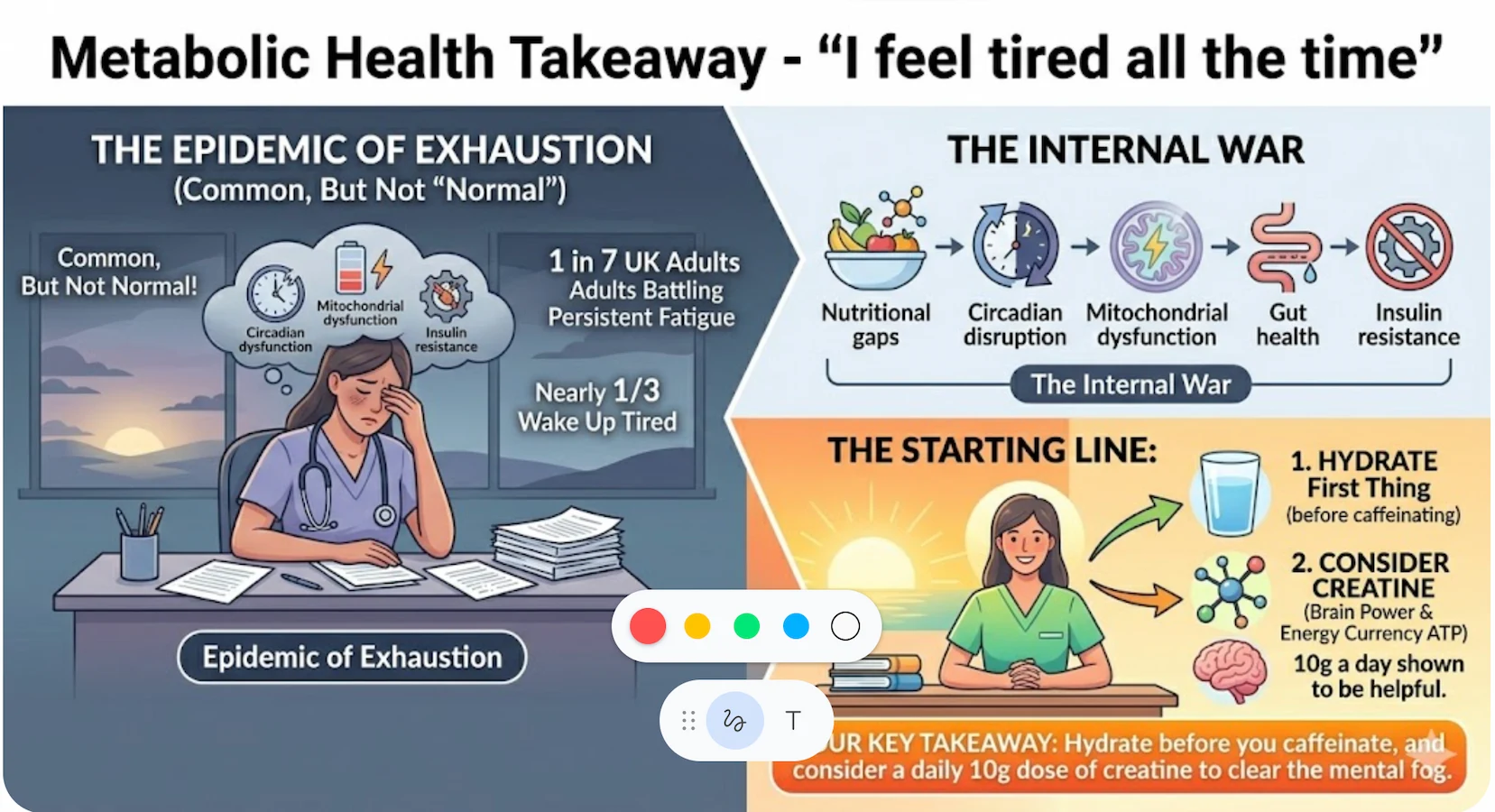
The statistics back up what I see in clinics: approximately 9 million people in the UK (1 in 7) are currently estimated to be battling persistent, life-altering fatigue. Beyond that “high-level” fatigue, nearly one-third of UK adults report feeling tired from the moment they wake up.
While women, teachers, and healthcare workers are statistically more likely to report chronic exhaustion, this has become a new normal across almost every profession and population group.
Common, but not ‘normal’
The most important thing I tell my patients is this: feeling like this is common, but it is not normal. It is not an inevitable part of ageing.
While external factors like job insecurity and world events weigh us down, there is often an internal “war” happening. Nutritional gaps, circadian rhythm disruption, mitochondrial dysfunction, gut health, and insulin resistance all force the body to work twice as hard to keep things balanced. Effectively, your body is burning all its fuel just to stay still.
The starting line: two quick wins
When you are dealing with low energy, “complex” doesn’t work. You need simple, needle-moving actions to get started:
-
Hydrate to stabilise: Start your day with a large glass of water. If you’ve had a disturbed night’s sleep, you will be more dehydrated the next morning — and dehydration directly increases insulin resistance. Correcting your fluid levels is the easiest way to help your metabolism manage energy better that day.
-
Support your brain: Consider adding creatine to your routine. It’s not just for athletes; it’s a powerhouse for the brain. For clinical benefits, 10g a day has been shown to be helpful. This helps the brain maintain its “energy currency” (ATP) even when you’re sleep-deprived.
Once you’ve secured these “quick wins,” you can begin the deeper work of looking at what and when you are eating to provide a truly steady energy supply.
Your key takeaway
Hydrate before you caffeinate, and consider a daily 10g dose of creatine to clear the mental fog.
For educational purposes only; not medical advice. Always consult your GP or dietitian before starting new supplements like creatine or changing your health routine.